
How Arrest Warrants Work in Grand County
In Utah, an arrest warrant is never automatic. A judge reviews a criminal filing and the facts behind it, and under Rule 6 a summons comes first in many cases. A warrant makes sense when the person's address is unknown, when appearance seems unlikely, when there is danger, or when a summons was already missed. Before signing, the court must find probable cause and a real need for the warrant. In Grand County, the split between courts is simple to follow. Seventh District Court handles felonies and Class A misdemeanors, while Justice Court takes traffic matters, infractions, and Class B and C cases. That case type tells you which clerk holds the answer to a status question about an active warrant.
Rule 6 and Grand County Arrest Warrants
The process begins with a prosecutor filing an information or an indictment. From there a judge reads the filing and its affidavit, weighs whether probable cause holds up, and then picks a summons or a warrant under the rule. Once a warrant issues, the clerk enters it into court systems, and the officer who serves it must return the order to the magistrate. The Utah Rule of Criminal Procedure 6 page lays out this statewide process, and the local court directory can then point you to the right Grand County clerk.
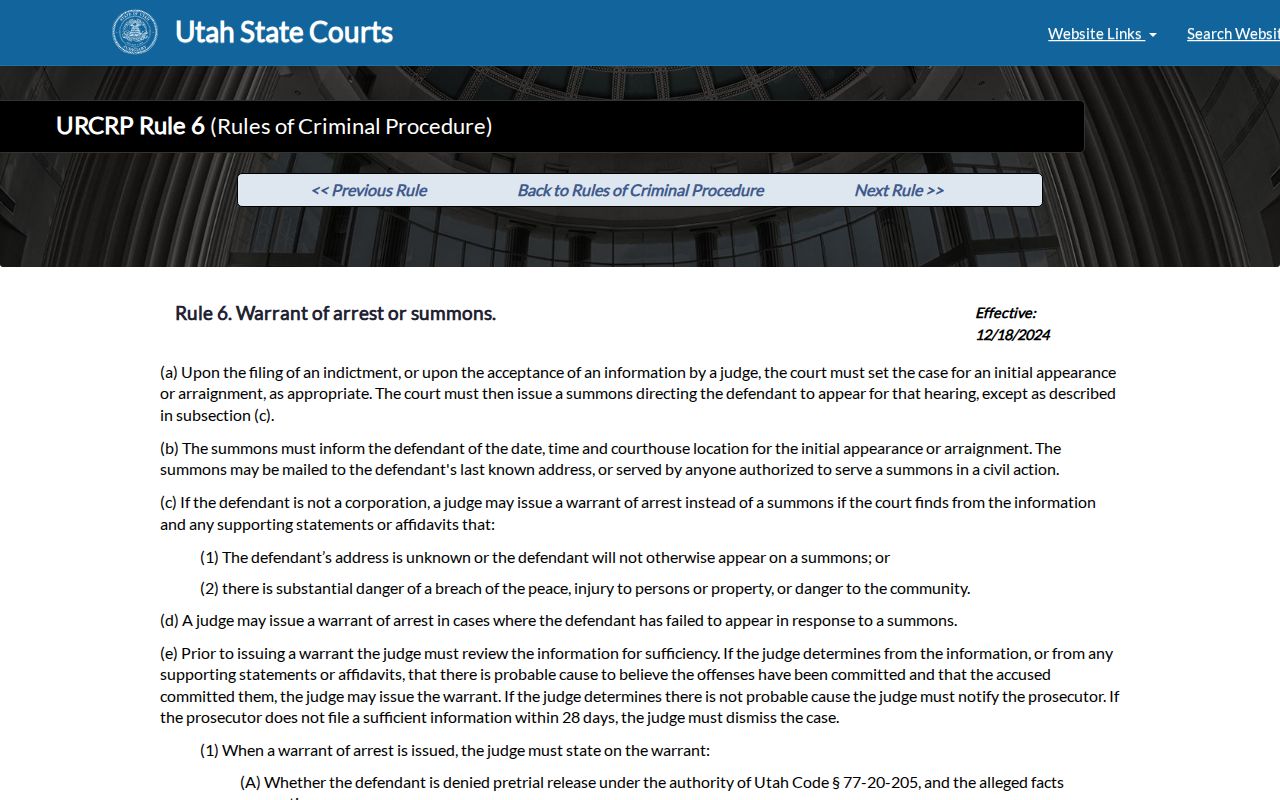
Rule language applies statewide; it does not publish a local Grand County bond amount.
Arrest Warrants: What They Contain
A warrant under Rule 6 carries more than a name and a charge. It must state the release conditions, whether monetary bail satisfies the order, whether personal appearance is required, and the transport area. The Grand County court record also shows the case number, the judge, the charge class, the serving agency, and any later return or recall action.
| Warrant number | Court identifier; Grand County format was not located |
|---|---|
| Issuing court | Seventh District Court, Justice Court, or another named court |
| Charge and class | Offense description and Utah classification |
| Release terms | Bail, appearance requirement, or other condition |
| Transport area | Geographic direction stated under the court rule |
| Service return | Officer’s report back to the magistrate |
Grand County publishes no sample warrant or local number pattern. These fields come from the rule alone.
Grand County Arrest Warrant Release Terms
Release terms live in the warrant itself. The judge decides whether personal appearance is required, whether monetary bail works, or whether release is denied pending court action. Bond amounts are case-specific. Grand County posts no public bail schedule, no bond payment window, no list of accepted methods, and no walk-through policy. Before heading to the Sheriff, call the clerk of the issuing court and ask what the order actually says, where bail may be posted, whether counsel can arrange an appearance, and whether a judge must act first. Be careful with payment vendors. The Justice Court's citation payment vendor is not necessarily a bond portal, so do not read its card fee or fine options as release instructions for a Grand County warrant.
Confirm the actual release terms with the issuing court. A general online record cannot tell you whether a local walk-through or bond route will be accepted.
How Warrants Get Served in Grand County
Utah Rule 6 lets a peace officer execute a warrant anywhere in the state. In Grand County, Sheriff deputies serve criminal warrants and run county-wide law enforcement. Moab City Police may execute and serve court process under city code, and the County Attorney names Utah Highway Patrol among the responding agencies. The Grand County Attorney page maps the local prosecution roles, though it serves as a jurisdiction reference rather than a warrant roster.
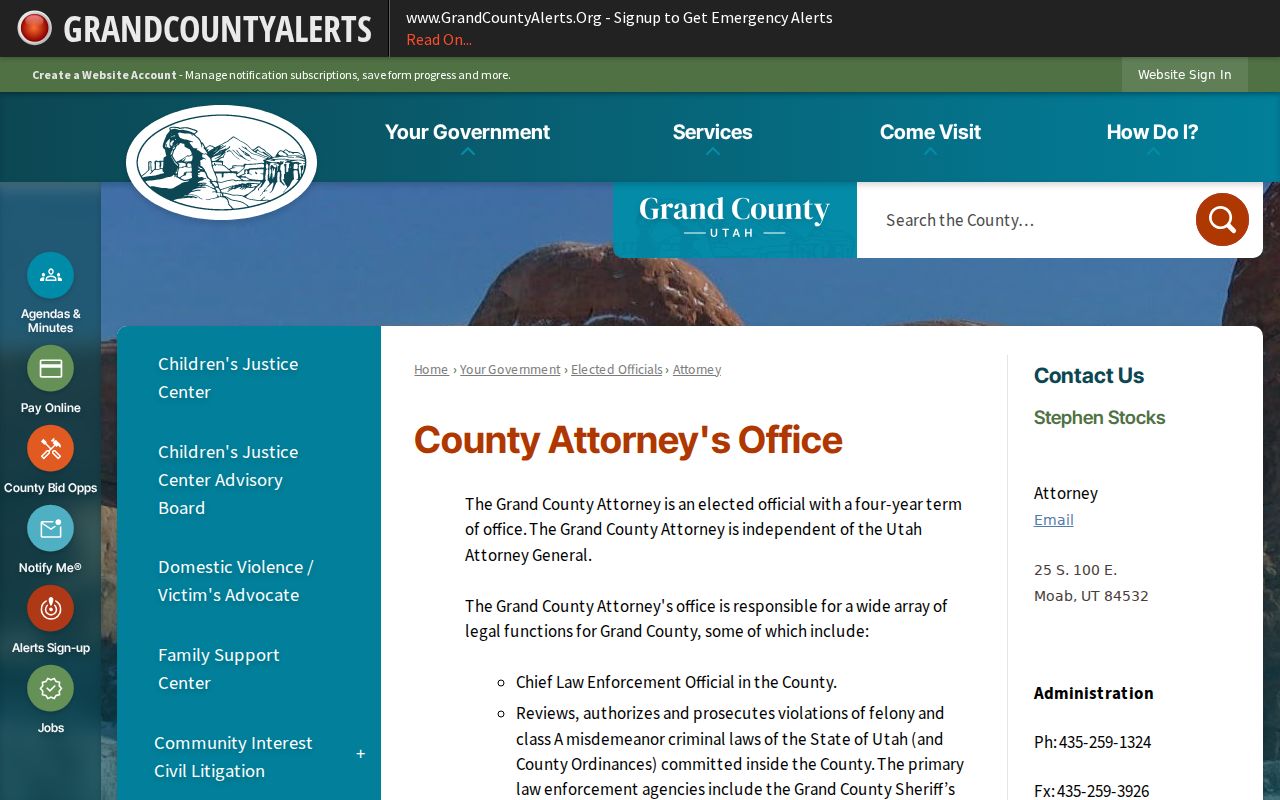
Which agency shows up depends on the case and its authority. Ask the Sheriff at 435-259-8115 about execution or booking in Grand County.
Grand County Arrest Warrant Service Agencies
Serving a warrant and controlling a case are different jobs. The court issues or recalls the order; an authorized peace officer serves it. An agency that answers a Grand County service question cannot change the case underneath.
Grand County Sheriff
County-wide law enforcement, criminal warrant service, and booking questions.
435-259-8115
Moab City Police
City police and service contact; no separate public warrant portal was found.
435-259-8938
Utah Highway Patrol
State agency named among local criminal prosecution partners.
The Grand County Sheriff lists administration hours apart from a jail line open 24/7. That is not a surrender or bond-window schedule.
Arrest Warrants, Summonses, and Bench Warrants
A summons orders a person to appear and carries no arrest authority on its own. An arrest warrant rests on probable cause plus a judicial finding that a warrant is needed. A bench warrant usually follows a missed court date or a failure to comply. These orders can appear in related Grand County cases, but each has its own reason and its own steps.
| Process | Why it issues | Grand County contact |
|---|---|---|
| Summons | Notice to appear | Court named on the filing |
| Arrest warrant | Probable cause plus warrant necessity | Issuing judge’s clerk |
| Bench warrant | Missed appearance or court obligation | Court that set the date |
A search warrant is different again. Rule 40 governs an officer's search for described evidence in Grand County, not a public check for an arrest warrant.
Before Grand County Arrest Warrant Service
Think an order might exist? Ask the clerk about its status before you visit the Grand County Sheriff. Give the case number, then ask whether the warrant is bailable, whether personal appearance is required, and whether the court lets counsel arrange a walk-through. The county posts no surrender or recall form. If the court directs a custody step, call the Sheriff at 435-259-8115 for booking details; the jail line is staffed 24/7, but the county does not confirm after-hours surrender, the intake door, bond methods, or release timing on any public page, so do not assume them. For an assigned case, the county publishes public defender contacts, and the Grand County Public Defender contact page is the official route to local counsel.
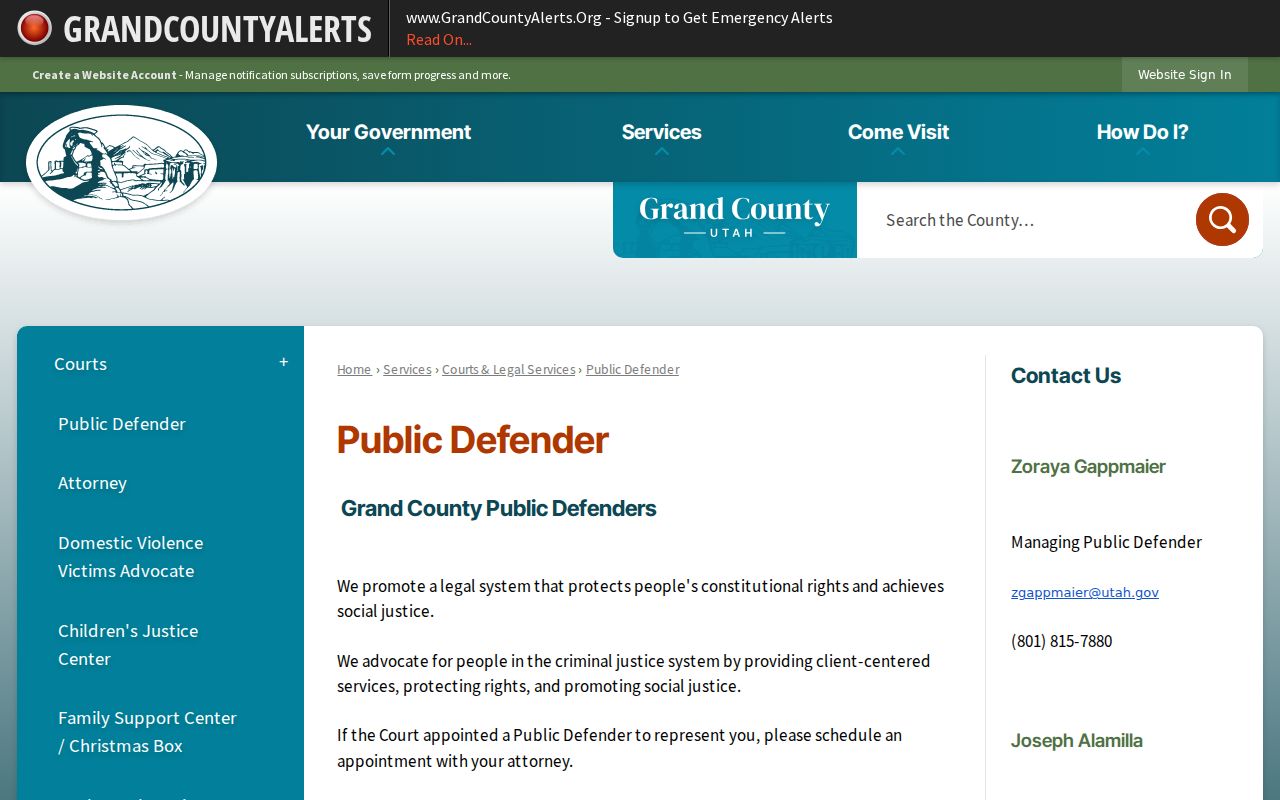
A Grand County attorney can ask the court for a safe appearance plan and the next filing.
Search Warrants Versus Grand County Arrest Warrants
Not every warrant works the same way. A search warrant lets an officer look through a named place or person for specific evidence. Rule 40 demands probable cause and particular detail. The supporting papers often stay sealed at first, so they never show up as arrest status in the statewide self-search. That self-search tool covers qualifying arrest and failure-to-appear warrants only. A search-warrant application follows the court's own sealing and release rules instead. Grand County residents should also know that juvenile, federal, protective-order, and out-of-state matters run on different systems entirely.
Handling an Arrest Warrant in Your Name
Facing an active warrant in your own name? Start with the issuing Grand County court, and bring in a lawyer if you can. The clerk can tell you the case status, your release condition, any required appearance, and whether an order was recalled or changed. If bail is allowed, ask where and how to post it. Only the court can confirm the amount for that case.
- Write down the issuing court and case number from the state result or notice.
- Call the court clerk before appearing or paying.
- Ask counsel or the public defender about any required motion or walk-through.
- Call Sheriff/jail about service or booking instructions if the court directs it.
- Keep the order or docket entry and recheck the state file after court action.
Do not rely on a name-only match or an old screen. Confirm the order with the court before acting.
For the general county search route, use the Grand County warrant check page.