
How Traffic Warrants Work in Grand County
Grand County Justice Court hears traffic cases, infractions, Class B and C misdemeanors, and river-runner safety citations. The county traffic page sets a firm deadline. A ticket must be paid within 21 calendar days. Miss it and the case turns delinquent, with a $50 fee. If payment still has not arrived 15 days after delinquency, another $75 fee is added and the court issues a warrant for arrest. That is the county's own wording. Utah citation procedure instead calls it a bench warrant after a failure to appear. Read the court line on the ticket, since the court named there controls payment and recall.
Grand County’s Citation Deadline and Added Fees
This schedule comes from the county's own traffic page, not a general Utah table. What you owe depends on your citation. Once the 21-day deadline has passed, call Justice Court at 435-259-1334 before paying anything. Ask for the full amount. Also ask whether the warrant is still active and whether an appearance or a reset is required. The official page lays out the 21-day deadline and the later fee steps. Written court instructions control. If the page is updated, those instructions govern what you must do. Grand County traffic ticket instructions post the county's citation timeline.
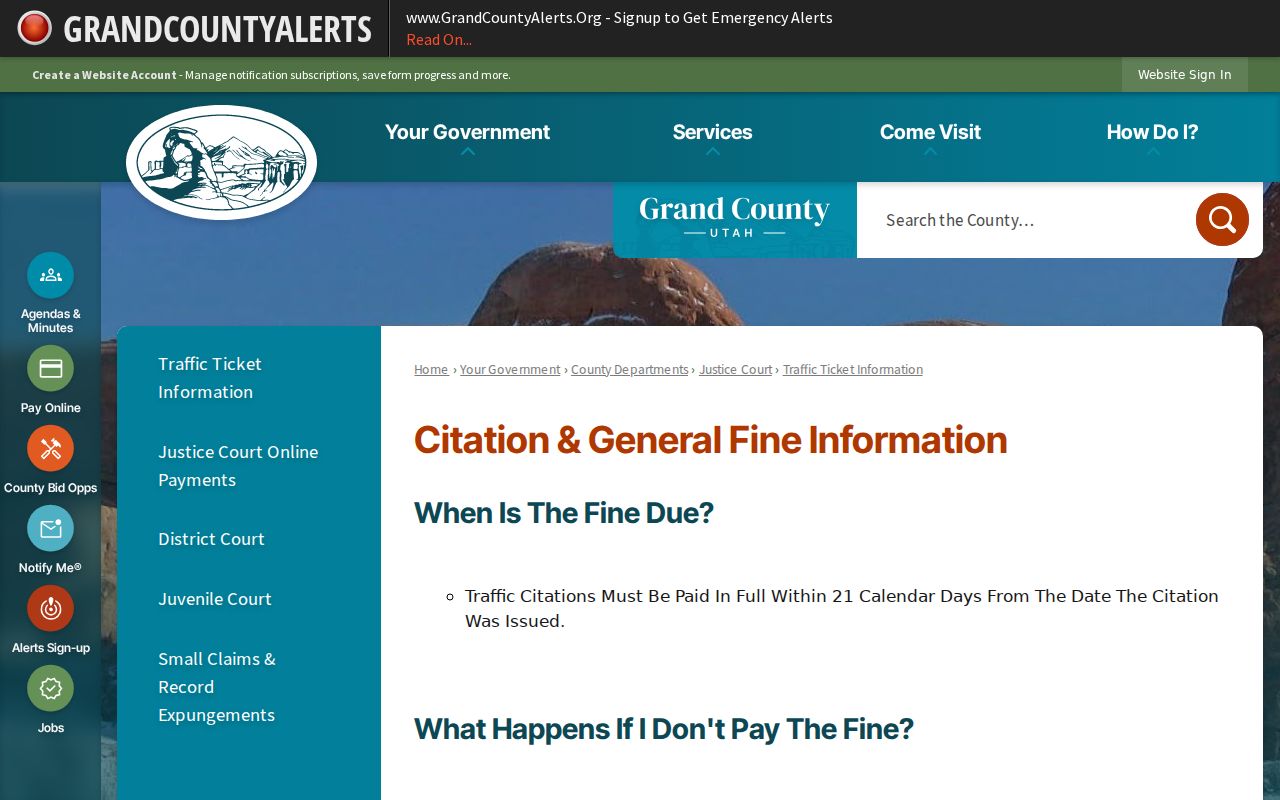
The 21-day and 15-day periods are calendar intervals listed by Grand County.
| Time or event | County-stated action | What to verify |
|---|---|---|
| Within 21 calendar days | Pay the citation in full | Exact balance with the court |
| After deadline | $50 delinquency fee | Whether the fee posted |
| 15 days after delinquency | Additional $75 and arrest warrant | Active status and required appearance |
Grand County Traffic Warrant Checks
Start with the Utah Statewide Warrants Search, then contact Grand County Justice Court for the citation record. The direct statewide screen returned 403 during research, so exact first-name, last-name, date-of-birth, court, and citation fields are not confirmed. BCI describes the public search as a name search. Do not assume the payment vendor’s case-search link uses fields that were not captured.
For county case context, XChange may show an eligible public Justice Court docket. It is not a guaranteed warrant-status screen. If the state result is blank or old, call the clerk and give the case or citation number.
The broader Grand County warrant check steps explain the other official search channels.
What the Grand County Payment Vendor Shows
Secure Instant Payments is the official vendor, linked from the Grand County Justice Court and traffic pages. Its screen offers a Case Search and Payment Option link, and the payment form is what you reach there. Fields cover method, card or account name, routing and account numbers, expiration date, billing street, and ZIP code. The vendor charges 2.5% with a $2.50 minimum. A foreign card adds a 1.5% service fee. That fee is separate from the fine. Case questions belong to Justice Court at 435-259-1334. Grand County's online payment vendor displays the payment route and service fees.
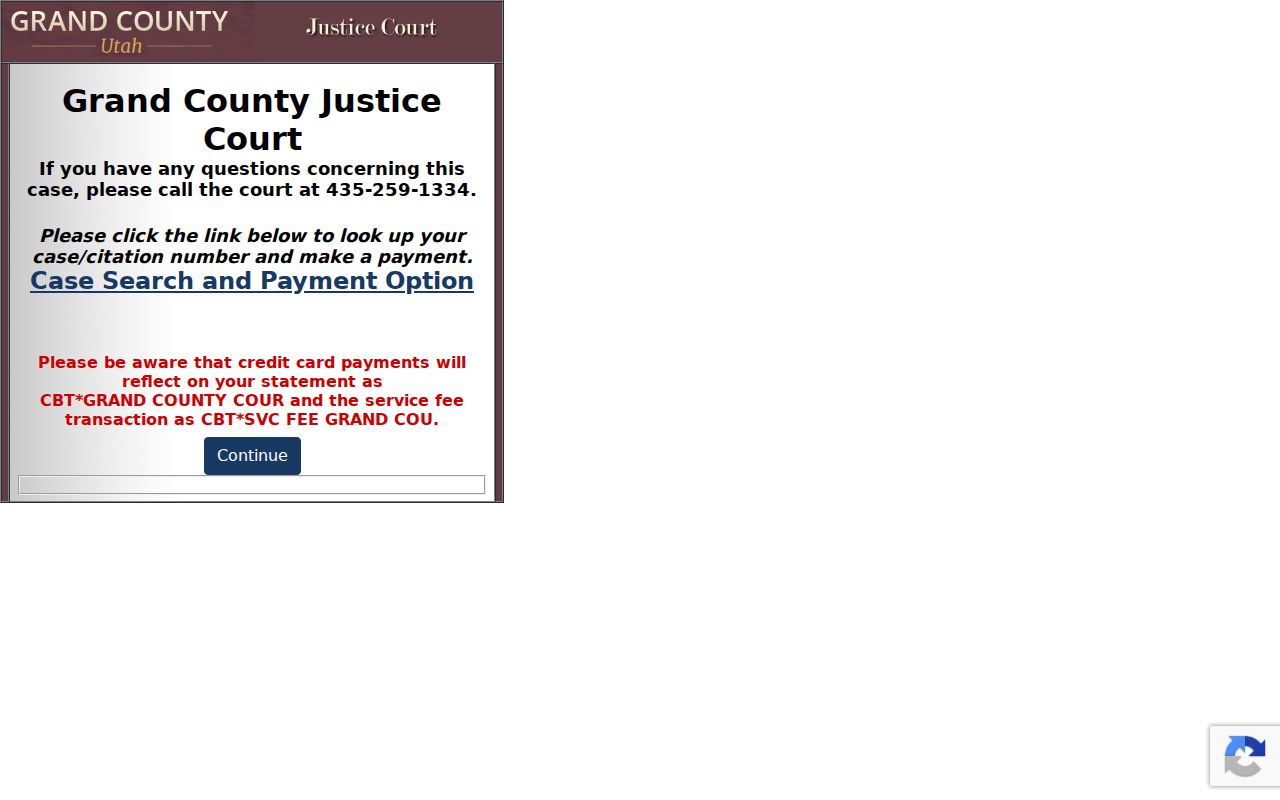
Those are payment fields, not verified warrant-search fields. Grand County Justice Court, not the vendor, confirms the balance and warrant status.
Traffic Warrants: What They Show
A traffic warrant record can tie the citation to the issuing court, the case number, the warrant type, its status, and any release or appearance condition. Grand County publishes no sample warrant number. Result layouts vary by search tool. What matters is the citation number and the court named on it.
| Example reference | Citation number format not published |
|---|---|
| Issuing court | Grand County Justice Court when named on the citation |
| Underlying matter | Traffic citation, infraction, or related FTA |
| Current step | Payment, appearance, reset, or court review as directed |
| State entry | Qualifying traffic FTA warrant in Utah’s statewide file |
A fine balance, a warrant status, and a license action are different record facts.
When Grand County Issues a Traffic Warrant
Grand County's traffic page ties the warrant to the delinquency sequence. That timeline alone cannot tell you where a specific citation stands. The person may have paid, received a new date, or had other court action since the sequence began. So call the Justice Court. Ask whether the warrant is still active. Ask whether the payment amount is current, and whether a separate recall entry or appearance is needed. Keep the receipt. Request a docket confirmation too. Grand County Justice Court contact page names the court counter and its contact route.
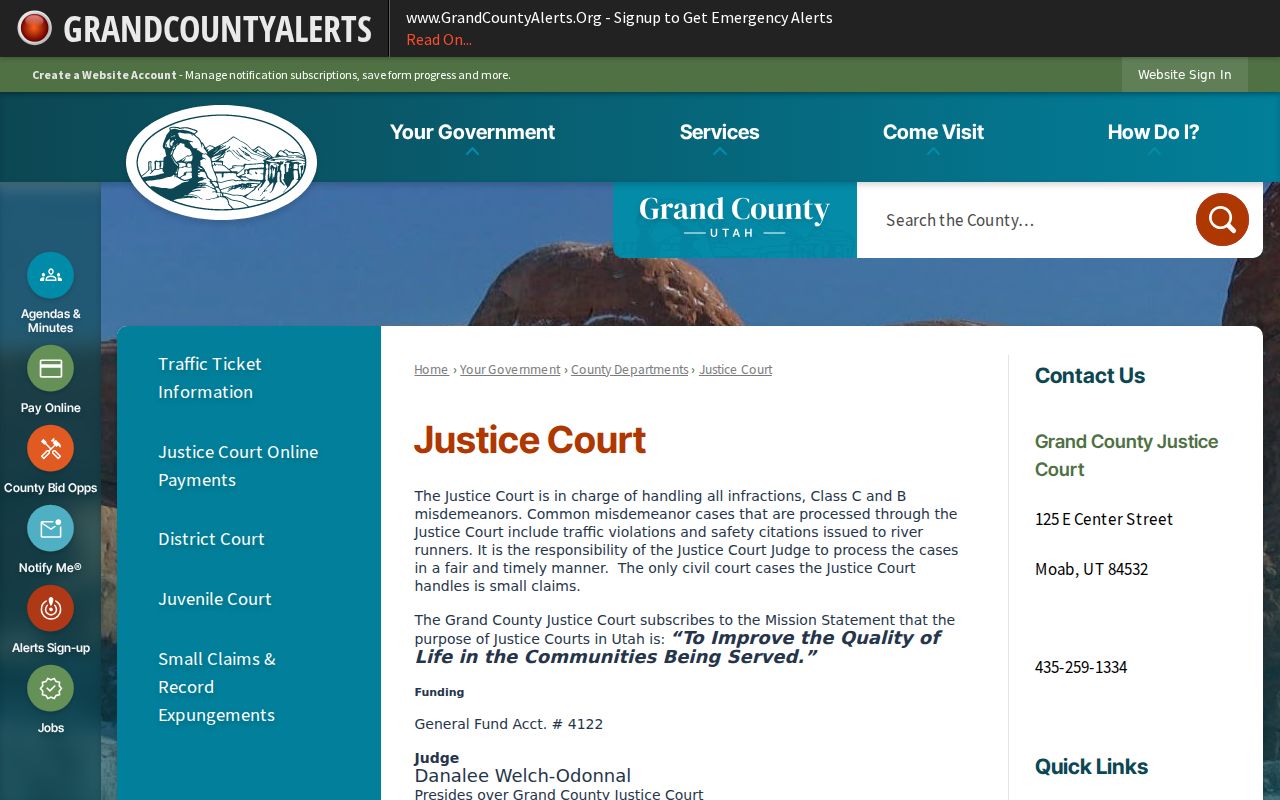
For case questions, the Grand County Justice Court page is the right route, though contacting the court does not clear a warrant by itself.
Clearing a Grand County Traffic Warrant
Follow the court's instructions rather than an unverified payment site. Grand County takes payment at the courthouse by personal check, cashier's check, money order, or credit card. The online vendor accepts cards too. Confirm the balance first, including delinquency fees. Then ask whether a new appearance is required.
- Read the court and citation number from the ticket.
- Call Justice Court and ask for the current total and warrant status.
- Confirm whether payment alone recalls the warrant or whether a reset is needed.
- Pay only through the courthouse or the official vendor linked by the court.
- Keep the receipt and court docket proof, then recheck the state search.
Payment may settle the citation without ending a separate warrant or court obligation. Ask the clerk what action closes each step.
Court Check Before Traffic Warrant Payment
The Grand County vendor's card charge is 2.5% with a $2.50 minimum. A foreign card adds a 1.5% service fee. Those are payment costs, not a bond amount and not a guarantee of recall. The Sheriff posts no online warrant list. For service or custody questions, call 435-259-8115. For balance and recall, use Grand County Justice Court. The city Treasurer's page says ordinary city payments exclude traffic violations and court fines, so City Hall is the wrong counter for a court ticket. If a citation names a city court, follow that court's line. Do not assume the county vendor applies. The city court warrant routing page describes the Moab-specific limits.
How Traffic Warrants Trigger License Holds
Utah's Driver License Division labels a suspended license SFTA, short for "Suspended fail to appear/comply." One missed court date can hit twice. A Grand County traffic FTA can leave a bench warrant open while the Driver License Division suspends the license. A license check is not a warrant check. Nor does reinstating the license recall the warrant. DLD wants the court fees paid, a docket showing the FTA cleared, and a $40 reinstatement fee where it applies. Ask the Justice Court what document it issues, keep that docket, and confirm the state warrant file on its own.
Before a Grand County Traffic Payment
Stop before paying a Grand County ticket. Ask whether the case has gone delinquent, what the full total is, and whether the warrant is still active. Find out whether payment also recalls the warrant or only clears the citation. Ask about a new court date too. Ask which docket entry to keep for DLD. If you pay through the online vendor, confirm its citation-search fields with the court before trusting a guess. Grand County posts no local warrant bond schedule. It has no walk-in clearing policy either. The Justice Court can explain the case, and the Sheriff handles questions about serving a warrant. After court action, recheck the state warrant file, and call the clerk if its display does not match your docket.