
Grand County Warrant Searches
Utah runs one statewide warrant file, and Grand County cases flow into it. State law requires courts to enter qualifying felony, misdemeanor, infraction, and traffic failure-to-appear warrants. The BCI warrant information page links to the free Statewide Warrants Search, which is the natural first stop for anyone checking for an active warrant. Treat what you see as a lead, though. BCI itself warns that the file depends on courts entering and removing warrants on time, and it promises no public refresh schedule. When a search turns up a possible Grand County warrant, write down the court name, case or warrant number, type, and displayed status. Then call the clerk who controls that case and ask the court directly. Only use information you are authorized to handle.
- Search the state portal and record the court and number shown.
- Call Justice Court for a traffic, infraction, or Class B/C case.
- Call the Seventh District clerk for a felony or Class A case.
- Call the Sheriff for service or booking questions, not recall decisions.
- Use GRAMA if a formal Sheriff record request is needed.
Utah Search for Grand County Warrants
The official public channel for a warrant lookup is the Utah Statewide Warrants Search. BCI describes the file as a statewide source for people wanted in Utah, fed by court records through state systems. Clerks report each issuance, recall, cancellation, or modification. Grand County publishes no separate Sheriff warrant list, so the state screen is the shared starting point. The official search page shows the query interface. If the portal changes, start again from BCI's page. A name match still needs the issuing clerk's confirmation, especially before you pay anything or travel.
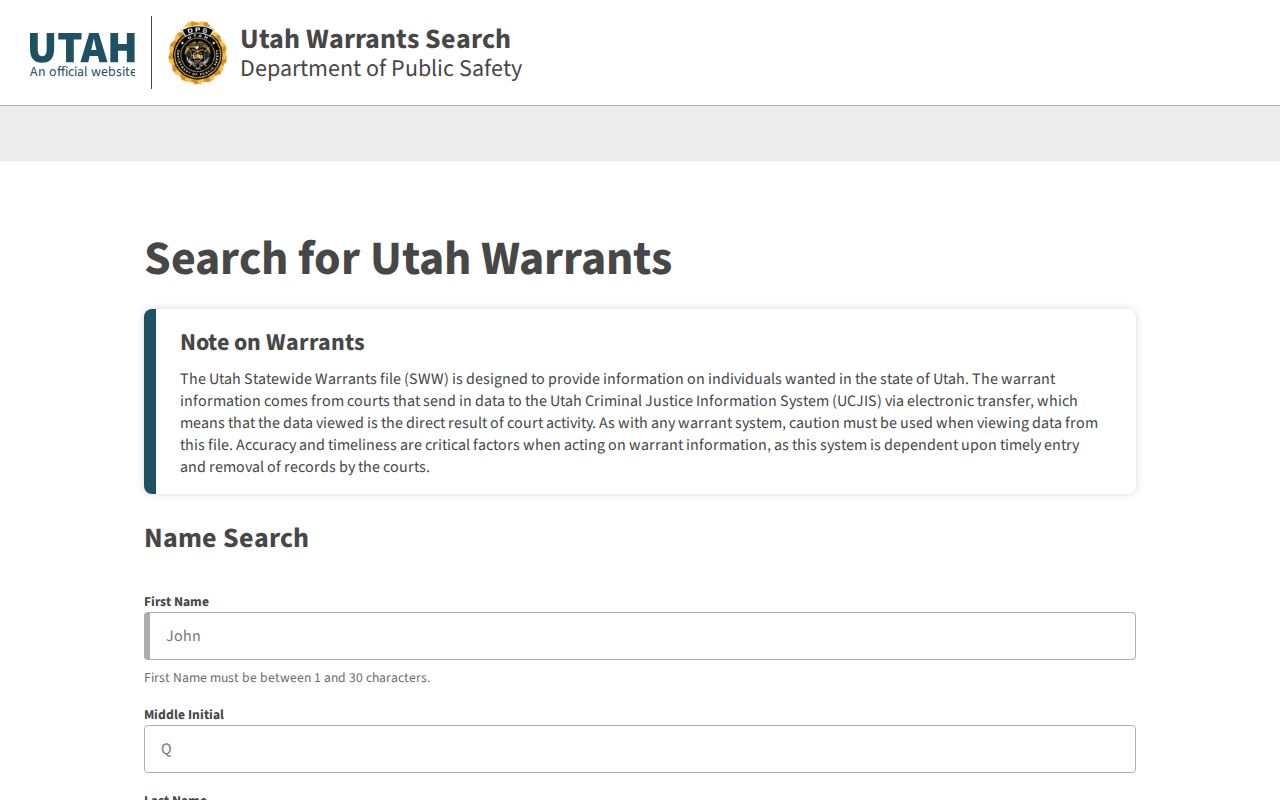
BCI notes that timing depends on court entry and removal. Treat the state screen as a starting point for a Grand County warrant check, not the final word.
What a Warrant Search Asks For
BCI confirms the public service searches by name. What the live screen asks for, such as a birth-date or county filter, varies. Grand County searchers should not read a missing option as proof the court lacks a warrant record.
| Search item | What research confirms | Use | Limit |
|---|---|---|---|
| Person name | BCI describes a public name search | Enter the name as known | Exact or partial matching is unverified |
| Date of birth | Live field not confirmed | Have it ready for the clerk | Do not claim the portal accepts it |
| County or court | Live field not confirmed | Use result details to route a call | No Grand County filter verified |
| Case or warrant number | State field not confirmed | Give it to the court if available | Exact local format not published |
A citation number or case number helps court staff pull the right file fast. Grand County clerks can locate a warrant by phone even when the public portal offers no such field.
Unverified Warrant Search Fields
The statewide search page blocks automated tools with an HTTP 403, so its exact form labels, such as first name, last name, date of birth, court, or submit button, are unverified. BCI confirms the free warrant search exists. That is a limit of the record, not an excuse for guessing a form. Use the controls the current official page actually shows, and skip assumptions about wildcards or partial-name matching. If the screen will not load, go back to the BCI landing page, then call the issuing court with identifying case details. The court can confirm the warrant's official status and explain the next step. Grand County's clerk directories list phone and email routes, but neither court advertises a dedicated warrant hotline. Sort out the case class first so your question lands at the right counter.
Grand County Warrant Search Results
A warrant search result can carry a case or warrant identifier, court, warrant type, charge class, release condition, and a status like active, served, recalled, cancelled, or modified. Use those fields to route your question to the right clerk. Do not settle anything on a name match alone. A bond amount is not a fine, and a traffic delinquency fee is not a universal bail schedule. If a Grand County status looks stale, ask the court whether a later recall or cancellation has been entered.
| Safe example | Case number format not published |
|---|---|
| Issuing court | Justice Court, Seventh District Court, or another Utah court |
| Order type | Arrest, bench, or qualifying traffic FTA warrant |
| Release term | Appearance or bail instruction set by the issuing judge |
| Update | Court action must reach the state file |
Grand County XChange Cases Versus Warrant Search
Utah Courts XChange is a case-information tool, not a full warrant-status search. It can identify a court and show eligible case history for a Grand County matter. Its published coverage and guest access controls appear on the official pages.
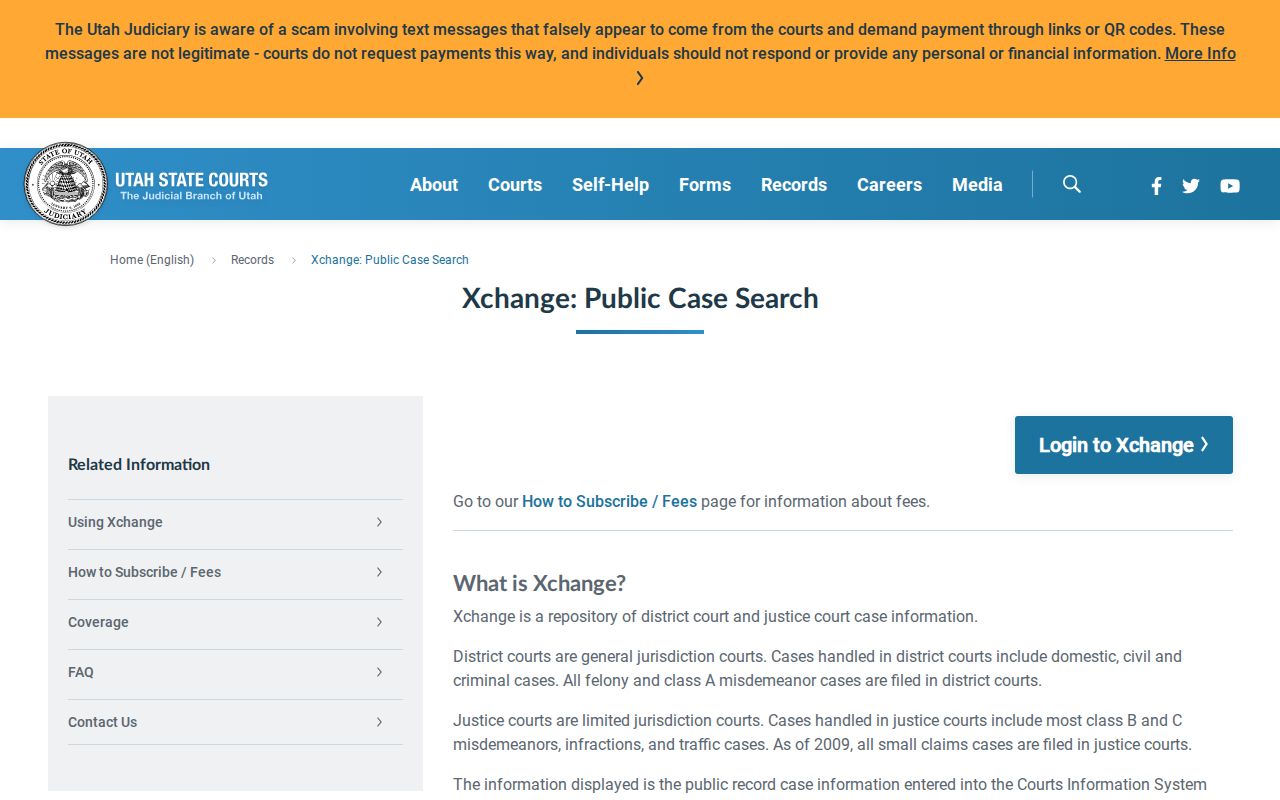
A Grand County case lookup through XChange has limits. Sealed, expunged, juvenile delinquency, child-welfare, and similar restricted records stay out, and public courthouse terminals may offer another route. Even so, a case summary is no substitute for calling the clerk about an active warrant. The official XChange sign-in page lays out guest access and payment options.
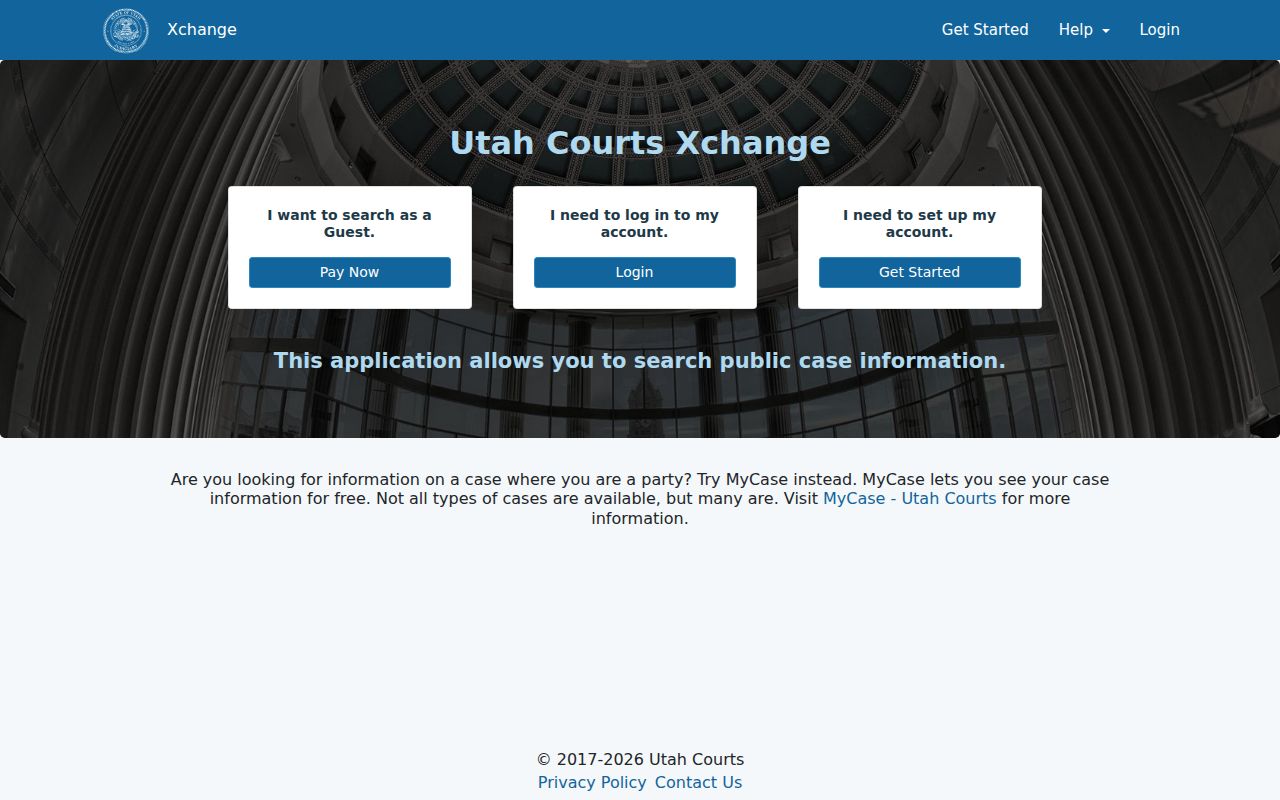
Some records sit behind account or payment walls. MyCase fills a different role in Grand County. After registration and identity checks, an eligible party can review linked case history, filings, and payments. It covers a person's own cases, not a public warrant lookup for any name.
Grand County Warrants: Who Holds What
Where a Grand County file lives depends on its class. Justice Court holds traffic, infraction, small-claims, and Class B or C matters, while the Seventh District Court clerk keeps felony and Class A criminal files. For questions about executing a warrant, booking, or custody in Grand County, call the Sheriff's staff. Moab Police can assist with city service or police records; no separate city warrant database exists. Both courts share the 125 E. Center Street courthouse, and the County Clerk/Auditor sits at that same address even though the county says plainly that office is not a court clerk. So the case class, not the building, tells you which clerk to phone. The Utah Courts home page opens the statewide court structure and case services, the court system's own entry point rather than a Grand County warrant record.
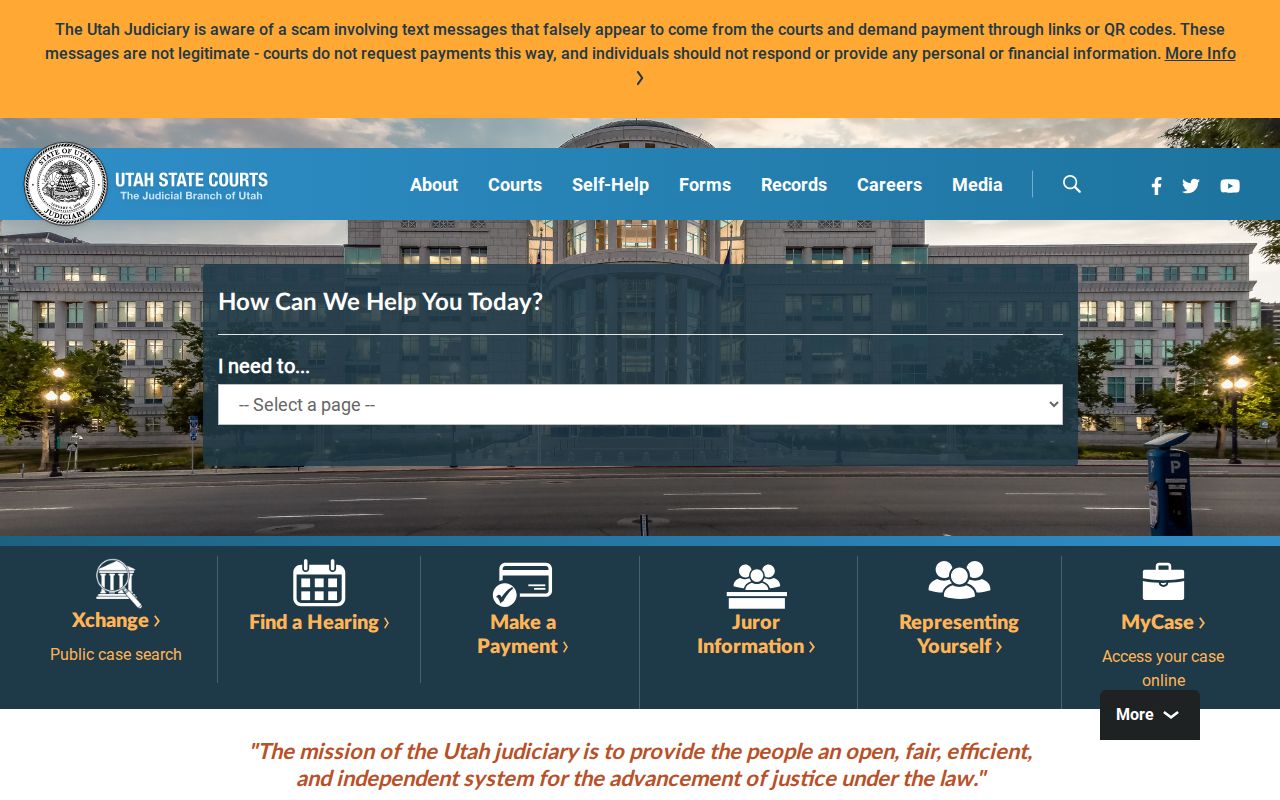
Use the named court’s clerk for a case-level status or recall question.
Justice Court
Traffic and local misdemeanor matters
435-259-1334
Seventh District Court
Felony and Class A case files
435-259-1355
Grand County Sheriff
Service and booking questions
435-259-8115
When No Grand County Warrant Match Appears
A blank result proves little. The warrant may be new, sealed, restricted, or filed under a different spelling. It might belong to a court outside Grand County. Juvenile proceedings stay off the portal. Confirm the expected court and case number, then call. Traffic and Class B or C matters go to Justice Court, while felony and Class A cases go to the Seventh District clerk. Sheriff-held records take a GRAMA request with a specific description and your state ID. Grand County sets 10 working days for a response, with a five-day expedited path when you can support the need. Classification can still limit what comes back. If a request is denied or redacted, ask the agency for its classification decision and appeal instructions. A records request recalls no warrant. It also moves no court date.
Which Warrants Stay Restricted
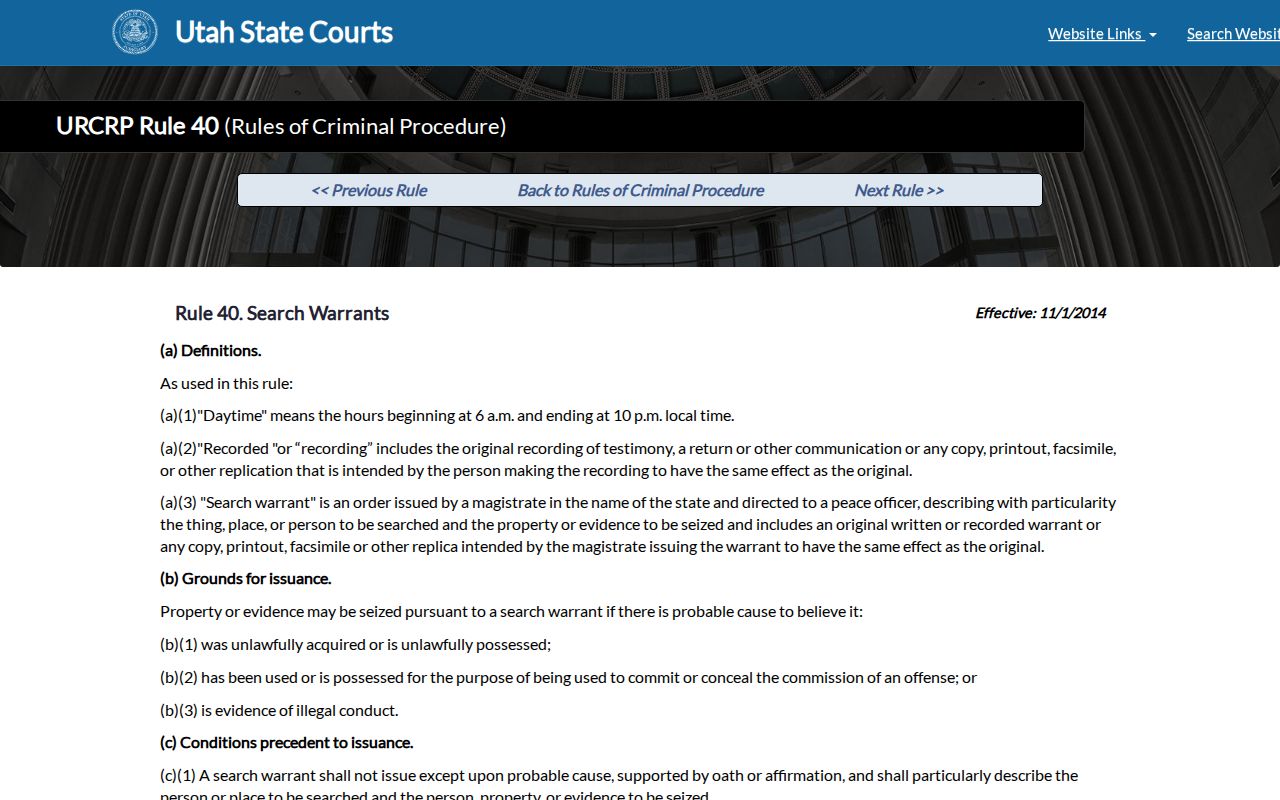
Juvenile warrants are no ordinary lookup. XChange leaves out juvenile and sealed cases, and search-warrant applications seal under separate rules, so a public arrest-warrant search tells you nothing about an affidavit. Utah Code §63G-2-301 covers public records. §63G-2-302 covers private ones. Rule 40 spells out the procedure for search-warrant material, a court process quite apart from any Grand County arrest-warrant page.
Grand County Sheriff forms also sort records as public, private, controlled, protected, or exempt. Protected details may be redacted.
A public search does not expose every court file. If a record is missing, ask the issuing clerk which access rule applies.
Rechecking Grand County Warrant Status
Hang onto the paperwork after a court recalls, cancels, or modifies a warrant. Keep the docket entry, written order, or payment receipt. Utah Code §53-10-208.1 makes the clerk update BCI after court action. The public screen may lag behind. No Grand County refresh schedule is posted. So ask the clerk when the entry went in and when to check again. If the state result persists, give the case number and ask whether the court record itself shows the change. Traffic FTA cases add a wrinkle. DLD may want a court docket showing the FTA cleared before it reinstates a license. For more on the statewide file, and on why no local Sheriff roster exists, see the Grand County active warrant information.