
Grand County Warrant Checks
Utah's free statewide warrants search makes the fastest first check, and the Utah Bureau of Criminal Identification links it. Bring the legal name and any citation or case number. The portal's exact search fields are not described, so do not count on a date-of-birth box or a county filter. Then match any hit to its court. Grand County Justice Court handles traffic, infractions, river-runner safety citations, and Class B or C misdemeanors. Seventh District Court takes the felonies and Class A misdemeanors. When a hit looks wrong or missing, the clerk for that case type is the one to call in Grand County. That call settles what the search cannot.
- Search the state portal and note the court, case number, warrant type, and status shown.
- Call Justice Court at 435-259-1334 for traffic, infraction, and Class B or C matters.
- Call the Seventh District Court clerk at 435-259-1355 for felony or Class A cases.
- Ask the Sheriff at 435-259-8115 about service, booking, or custody, not court recall.
State Search and Grand County Warrants
Utah's public warrant file pulls qualifying entries from courts across the state. Grand County clerks feed updates through court systems. The sheriff posts no separate active-warrant roster. The Utah Courts home page gathers the records tools, though any match still needs the issuing clerk to confirm it. No refresh schedule is posted, and a blank result does not prove a record is absent.
Warrants in Grand County: The Main Types
The court and the triggering event decide what kind of warrant you face. Miss a citation date in Justice Court, and a bench warrant for failure to appear can follow. Felony cases run differently. Grand County warrant questions usually start there, since a judge reviews probable cause before signing an arrest warrant, while search warrants follow their own separate access path.
| Record type | How it can arise | Local route |
|---|---|---|
| Arrest warrant | Judge finds probable cause and a warrant is needed instead of a summons | Seventh District or Justice Court, based on case class |
| Bench or FTA warrant | Missed citation, summons, or court-directed appearance | The court that set the date |
| Traffic warrant | Ticket remains unpaid after the county deadline and added delinquency periods | Grand County Justice Court |
| Search warrant | Judge authorizes a search for described evidence | Separate Rule 40 record, often sealed at first |
Grand County paperwork says bench warrant, warrant of arrest, and failure to appear. Capias pro fine is not the local term.
River-Runner Citations Use Justice Court
River-runner safety citations sit on the Grand County Justice Court docket next to traffic matters, infractions, and local misdemeanors. That matters around Moab. A citation from a Colorado River trip can land in the same courthouse as a road ticket, even though the event happened on the water. Read the court name printed on the citation first. Pay after you know which court holds the case. A date-change request works the same way. The county's 21-day deadline and its delinquency steps govern traffic tickets, so ask the clerk how they apply to your citation type.
When Grand County Citations Become Warrants
The Justice Court traffic page sets a strict local timeline. A citation is due in 21 calendar days. Miss that, and Grand County adds a $50 delinquency fee. The clock keeps running. If it stays unpaid 15 days after delinquency, another $75 is tacked on and an arrest warrant is issued. River-runner safety citations count among the court's listed case types. So even a water citation may belong there. These figures are citation fees, not a bond schedule. The clerk can confirm the exact total; the county has posted no warrant count and runs no amnesty event. The Grand County traffic information page spells out the deadline and each escalation step, and that page controls if the process ever changes.
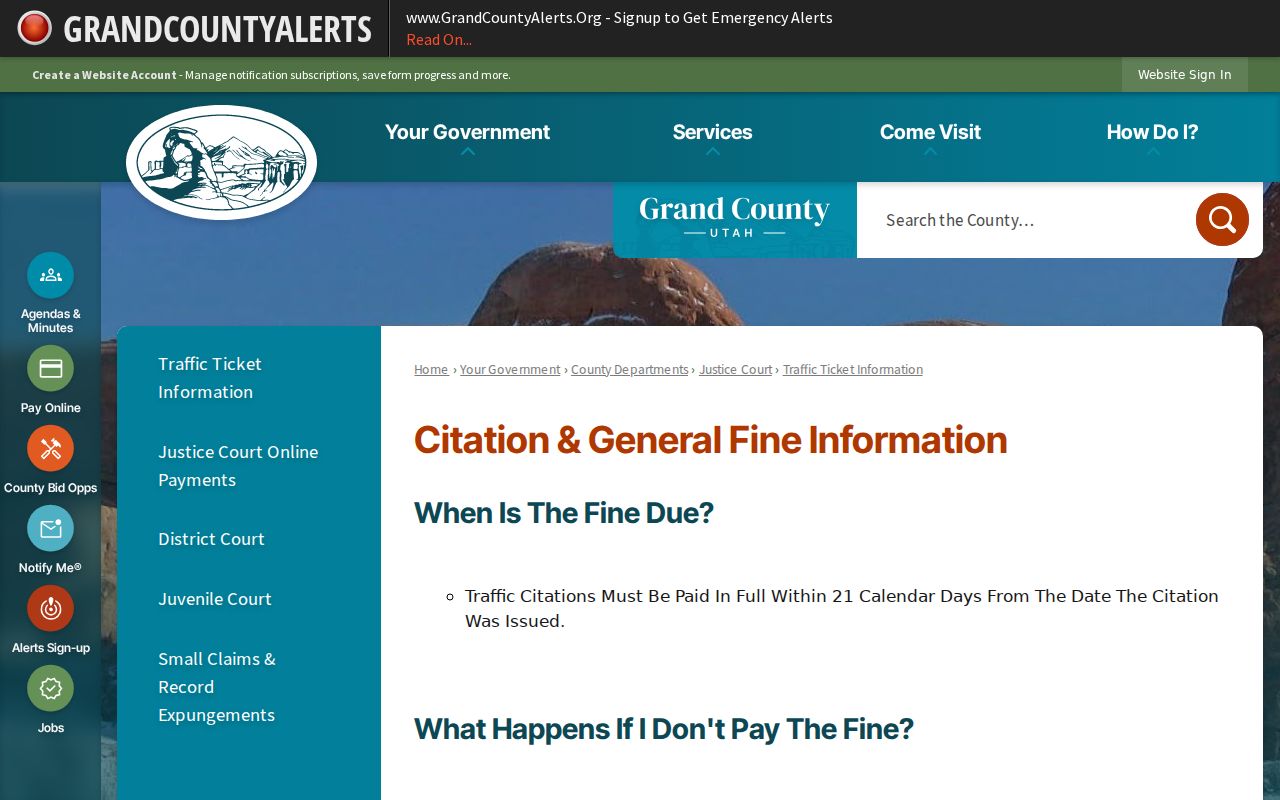
Those steps cover Grand County's traffic tickets only, not every court order or payment condition a case might carry.
Grand County Warrant Records: What They Show
Each warrant record ties a name to a court order. The statewide public file may list the issuing court, warrant type, charge or citation class, release condition, and status. Grand County publishes no sample person record. It offers no local warrant-number format either, so any example works as a field guide. Treat an example as a field guide, not a listing. For the search itself, start at the BCI warrants page. That official page is the doorway to the free Utah Statewide Warrants Search, not a result for any real person.
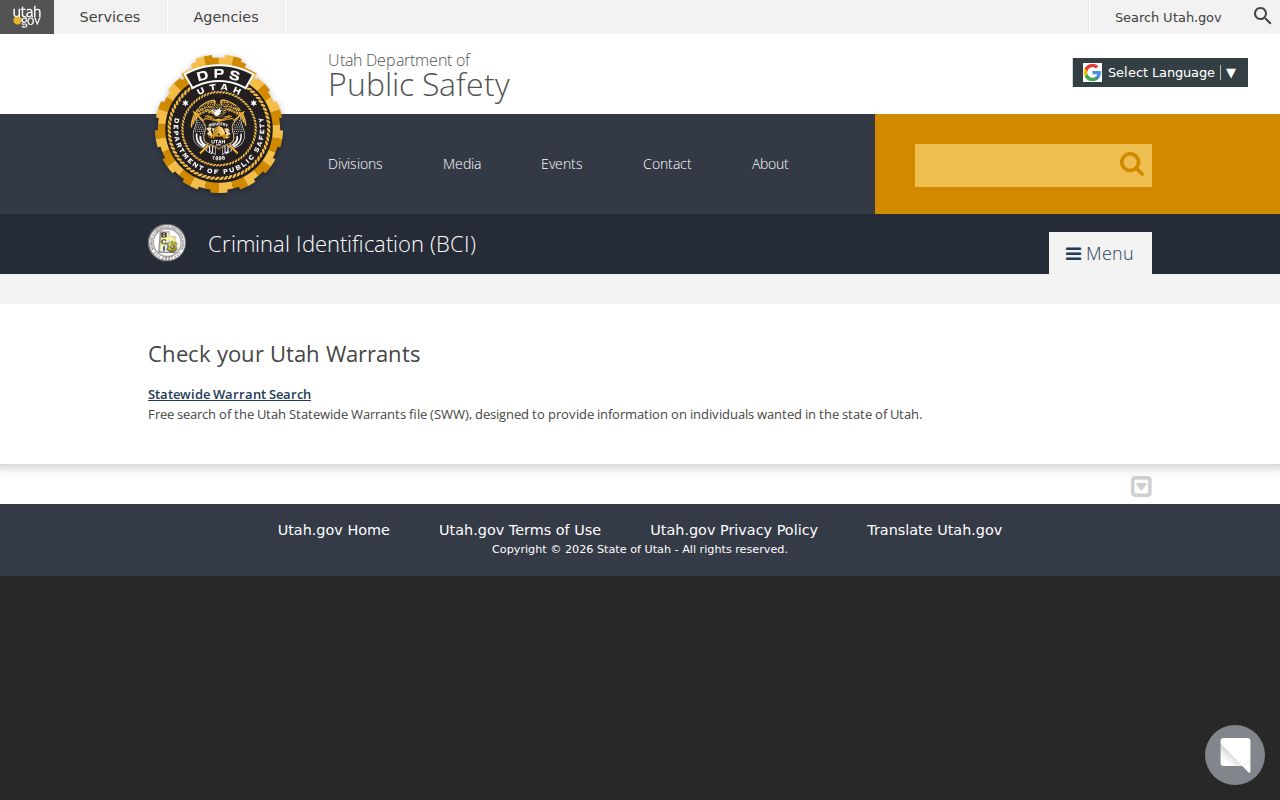
Only a court or law-enforcement office can confirm whether a displayed status is current.
| Example identifier | Court case number varies by court |
|---|---|
| Issuing authority | Grand County Justice Court, Seventh District Court, or another named court |
| Type and reason | Arrest, bench, FTA, or qualifying traffic warrant |
| Release terms | Appearance, bail, or other court-set condition; amount is case-specific |
| Status | Active, served, recalled, cancelled, or modified, as updated by the court |
A State Result Is Not Final Clearance
A state result is a lead. The court's own case record controls what happens next in Grand County. The court may have acted before its update ever reached the public search. A common name can mislead. Give the clerk the citation number. The docket, not the search screen, tells you what the Grand County court has actually done. Utah Rule 6 requires each warrant to state its release conditions, including whether monetary bail satisfies the order, whether personal appearance is required, and the transport area, and those fields explain the record without deciding the case. Paying a fine does not always recall a warrant.
County Clerk and Court Clerk Differ
Grand County keeps its Clerk/Auditor and the court offices at one courthouse address. Same building, different jobs. The Clerk/Auditor manages county administrative records and is not a court clerk, so that office cannot confirm whether a judge entered or recalled a warrant. For a warrant question, contact the clerk for the case type on your citation or docket. Justice Court handles traffic, infraction, and Class B or Class C matters. The Seventh District clerk handles felony and Class A files. Turn to the Clerk/Auditor only for county-held records, using its GRAMA process.
Grand County Warrants: Who Issues, Who Serves
Who issues a warrant matters as much as who serves it. Only the issuing court can issue, recall, cancel, or change one. The clerk keeps the case file and feeds qualifying updates into the state system. Peace officers handle service. In Grand County, the Sheriff holds county-wide jurisdiction, while Moab City Police and the Utah Highway Patrol can also serve within their own authority. The County Attorney's criminal division page explains which local cases that office prosecutes. To sort the court split, Justice Court case types and the Seventh District Court directory identify each clerk's route.
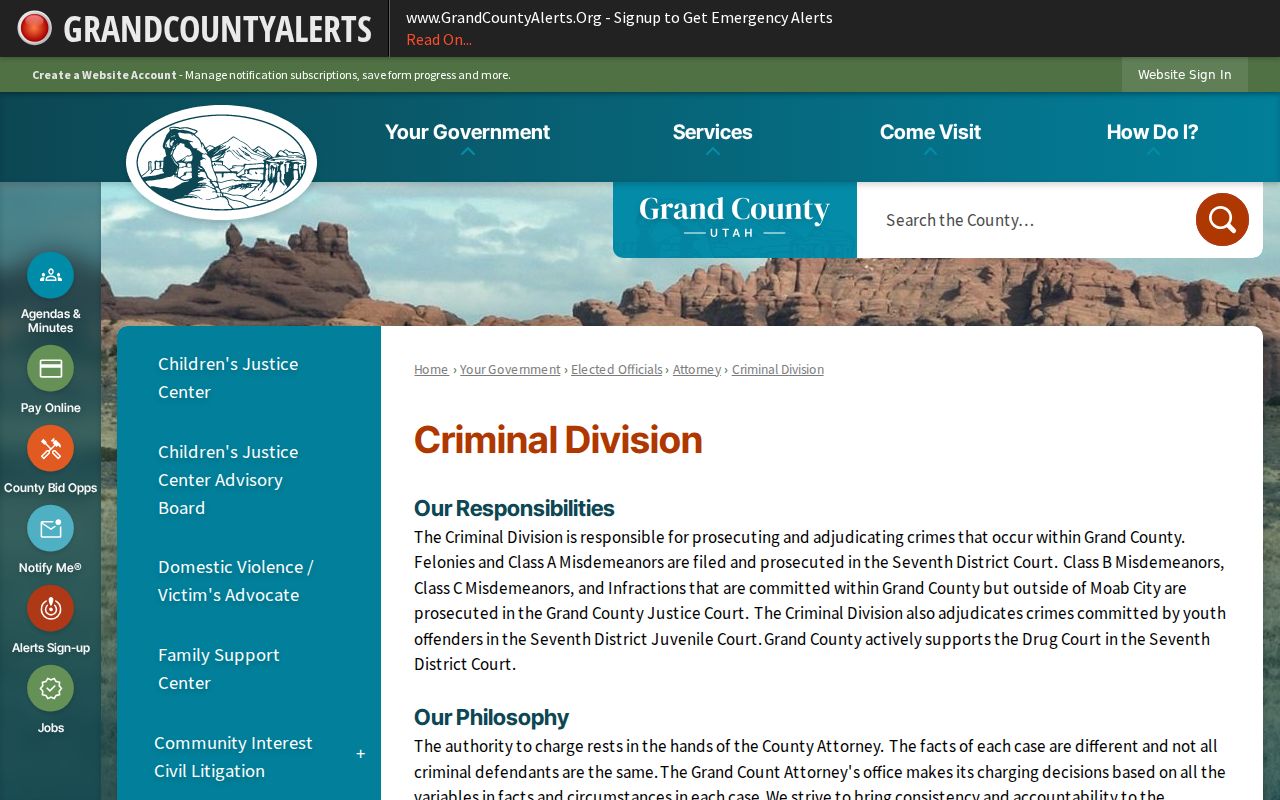
Both Grand County courts share the Moab courthouse address. The case class, though, decides which clerk can actually answer your warrant question.
Grand County Justice Court
Traffic, infractions, river-runner safety citations, and Class B or C misdemeanors.
125 E. Center Street, Moab, Utah 84532
435-259-1334
Seventh District Court
Felony and Class A misdemeanor case files for Grand County.
125 E. Center Street, Moab, Utah 84532
435-259-1355
Handling a Grand County Warrant
Before you drive anywhere or send money, call the issuing court. Ask what it wants: payment, a new date, a motion, a personal appearance, or a bond. If custody or surrender is on the table, call the Grand County Sheriff first at 435-259-8115. The jail line runs 24 hours, but that alone does not mean a walk-in warrant gets cleared at any hour. The county publishes no local bond schedule and no surrender appointment form. A lawyer can ask about a walk-through or another appearance plan, and for an appointed defender the county lists Managing Public Defender Zoraya Gappmaier at 801-815-7880. After any court action, keep the docket entry or receipt.
Do not rely on an old search result or assume a payment removed a warrant. Ask the issuing clerk what changed, then confirm the state file after the court update.
Traffic FTA and License Clearance
A traffic warrant and a driver-license hold often travel together, but they are separate records. The Justice Court's ticket schedule sets the local payment deadline and warrant timeline. The Driver License Division, meanwhile, may want proof that a failure-to-appear entry was cleared before it reinstates driving privileges. So work both files. Ask the court whether its docket shows your payment or appearance, then ask DLD what the license file needs. The reinstatement amount, where it applies, is $40. Paying off a traffic balance by itself does not prove the warrant was recalled or that the license hold has ended.
Warrant Record Access Under Utah Law
Utah's Government Records Access and Management Act, called GRAMA, sorts records into public, private, controlled, protected, and exempt classes. A request does not guarantee a full copy. Grand County's Sheriff form asks for a specific record description, a state ID, contact details, and an access basis, and the Sheriff notes that many report requests are limited to the record subject or a legal guardian. On the statute side, Utah Code §63G-2-301 covers public records and Section 63G-2-302 covers private records, while Utah Code §53-10-208 describes the statewide warrant file. XChange leaves out sealed, expunged, juvenile, and other restricted material. Juvenile matters never form a public roster. Grand County gives Sheriff GRAMA requests 10 working days, or five when expedited treatment is supported. The form lists $25 per hour after the first 15 minutes for retrieval, research, compilation, or redaction. The County Clerk/Auditor is not a court clerk, so take case questions to the court office that holds the file.
A record that is public for a specific request is not permission to copy or republish a person-level warrant file. The Sheriff’s form bars re-dissemination without written approval.
City Warrant Records in Grand County
Grand County's population list names two cities: Moab and Castle Valley. Each city has its own contact path. Neither posts a city warrant portal, so use each city page for police, citation, and records details. When a case crosses into county or state systems, follow the named court.
Moab
Police service and city records questions route through Moab City Police; traffic and many local citations go to Grand County Justice Court when named on the citation.
Police: 435-259-8938
Castle Valley
No separate town police, court, or warrant portal was verified. Start with the state search, then call the court named on the record.
Sheriff/jail: 435-259-8115
No Grand County Sheriff Warrant Roster
The official Sheriff page posts office, jail, and records contacts, but the Grand County Sheriff publishes no active-warrant search and no curated wanted roster. For a public check, use the Utah Statewide Warrants Search; to confirm status or request case action, use the issuing court. Sheriff record requests run through GRAMA and may come back limited or redacted. The 2026 form lays out access classifications and an appeal route, though it is not a warrant lookup. County notices carry no warrant count and mention no local roundup.